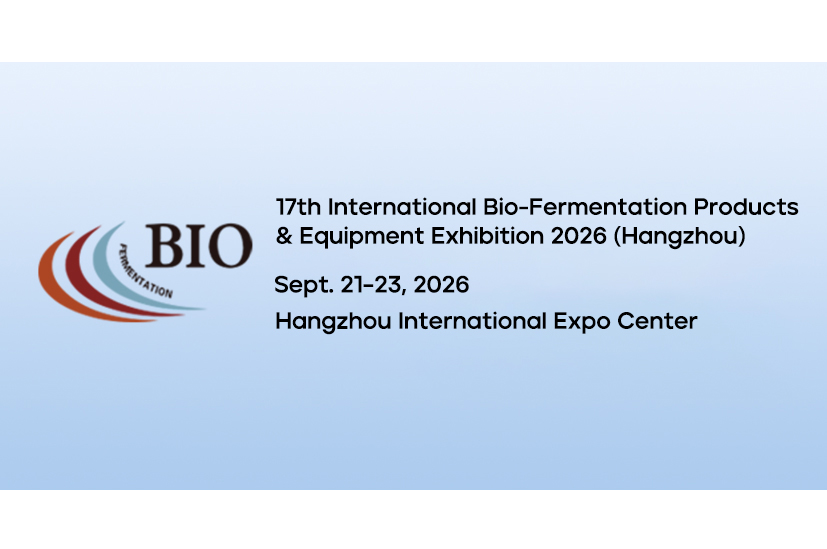
2026-11-02 16:59:18
2026 Annual Academic Conference Of China Biogas Society
Conference
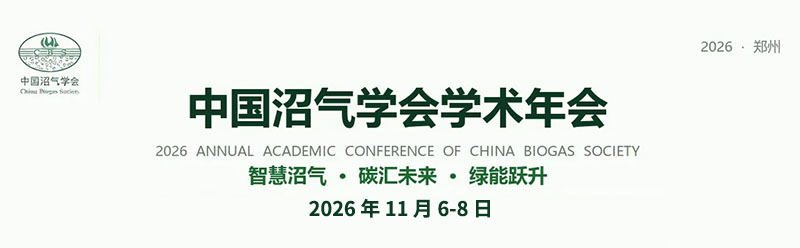
2、Organize site visits to the Zhongmu (Muyuan) Modern Industrial Complex Biomethane Project, the Landfill Leachate Biogas Power Generation Project of Zhengzhou (Eastern) Environmental Energy Engineering, and Binhang Environmental Technology’s “Planting-Breeding-Energy-Fertilizer” Circular Economy Project.
Booth
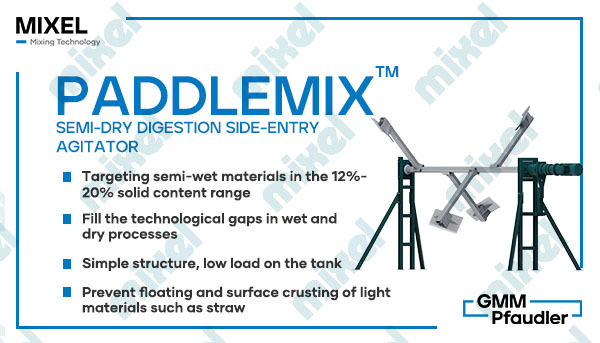
Product Background
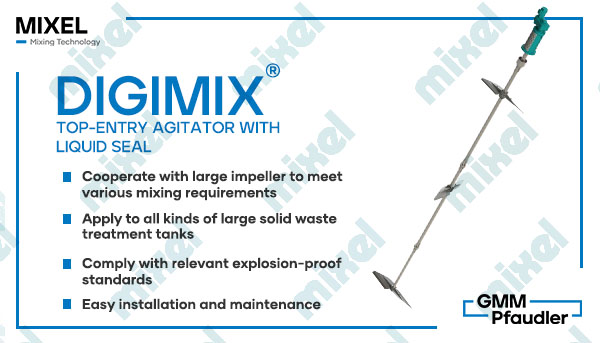
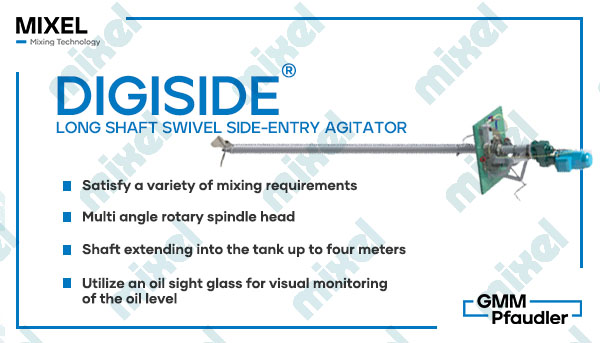
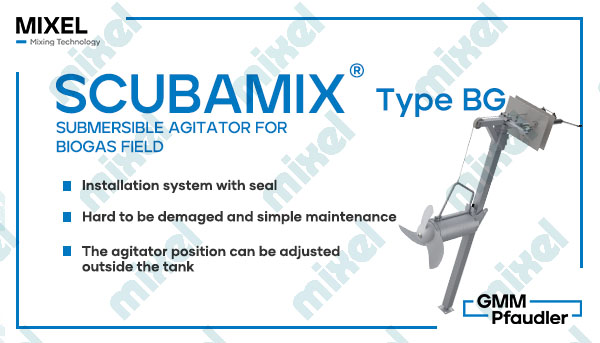
Dry/semi-dry anaerobic digestion targets high-solids organic waste (TS 10–35%). Under anaerobic conditions, the waste is converted into biogas through four stages: hydrolysis, acidogenesis, acetogenesis, and methanogenesis. It is suitable for food waste, livestock and poultry manure, crop straw, municipal sludge, and the organic fraction of municipal solid waste. Compared with wet anaerobic digestion, it requires less dilution water, has lower heating energy consumption, achieves a higher volumetric biogas production rate, and generates less biogas slurry, making it a mainstream pathway for the resource utilization of organic solid waste.
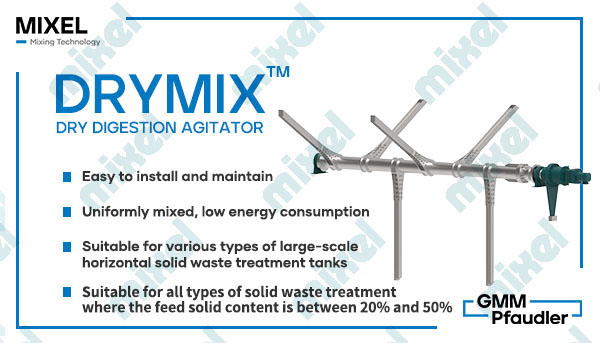
In mechanically agitated dry anaerobic digesters, typically horizontal plug-flow systems, the dry-type agitator operates throughout the entire process chain: feed homogenization, axial plug-flow conveyance, whole-tank mass transfer, and surface crust breaking. As a core unit of the reactor, it directly determines feed homogenization performance, hydrolysis and acidogenesis efficiency, and effective reactor volume utilization, while preventing local acid inhibition, feed stratification, bottom dead zones, and surface crusting.The core design trade-off lies between viscosity and shear: higher feedstock viscosity requires stronger shear intensity, but excessive shear can disrupt methanogenic aggregates.
| Process Challenges | Solutions |
| highly viscous and difficult to homogenize | The horizontal agitator, with a long shaft and large-diameter impellers, generates continuous axial plug flow. Impeller type, pitch and axial impeller spacing are custom-designed to match the material concentration gradient from the inlet to the discharge end of the process line, thereby enhancing material homogeneity. |
| High resistance and prone to stalling | A high-ratio, high-torque gearbox with a rigid shaft system, providing adequate torque margin for cold starts. |
| Agitation dead zones in the tank | To address sedimentation dead zones at the tank bottom, impeller angles and spacing are differentially arranged along the material flow path, ensuring the agitated flow field covers the dead zones, thereby eliminating localized sedimentation. |
| Floating scum and surface crusting | Shear/serrated crust-breaking impellers cut through the surface crust and submerge the floating scum back into the bulk liquid. |
| Local acid inhibition | Zoned variable-speed control along the plug-flow direction: strong mixing in the feed section, low-speed rotation in the middle section to protect methanogens, and continuous crust breaking at the liquid surface. |
Product Showcase
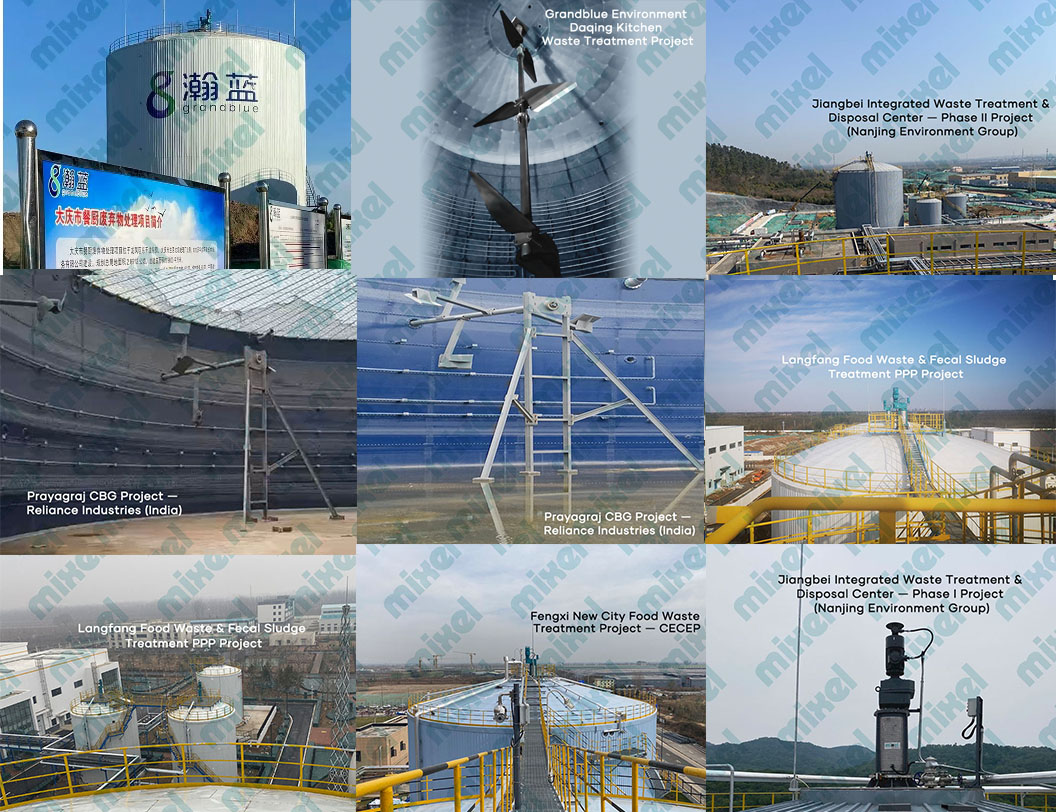
Anaerobic Project Examples
Clients
MIXEL
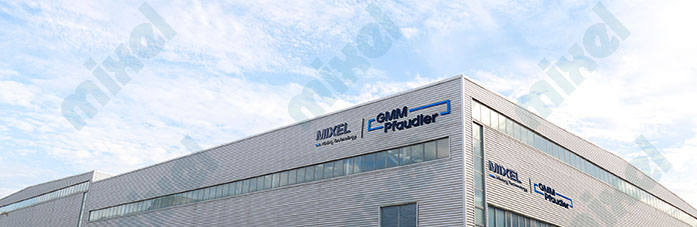
MIXEL,the core global mixing brand of German GMM Pfaudler Group, was founded in 1969.Headquartered in France, it specializes in fluid mixing and agitation technologies. In 2005, itestablished a wholly owned factory in China. Leveraging the Group's global manufacturingnetwork, MIXEL manufactures mixing equipment at 5 factories located in China, France, Canada,India, and Brazil. By integrating the group’s core competencies in glass-lined equipment,alloy materials, and sealing technologies, MIXEL delivers safe, efficient, and sustainablesolutions for customers' demanding processes.
GMM Pfaudler
GMM Pfaudler is a global, publicly listed process solutions group headquartered in Germany. Founded in 1884, the Group has a history of more than 140 years. It serves industries including chemicals, pharmaceuticals, food and beverage, fine chemicals, energy, and environmental sectors, providing end-to-end systems and services covering reaction, mixing, filtration, evaporation,and drying. With 22 manufacturing facilities across four continents and a service network covering more than 80 countries, the Group is trusted by more than 90% of the ICIS Top 20 global chemical companies.